An interview with Freya Redfearn – YONEX All England 2026

When the Badminton Museum met Freya Redfern

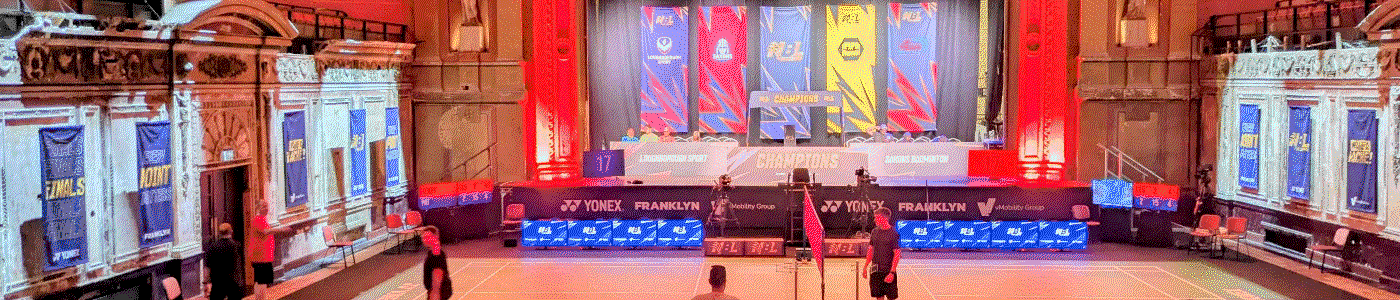
The YONEX All England Badminton Championships remain one of the most prestigious tournaments in world badminton. Each year the event brings together the best players, coaches, volunteers, and fans in Birmingham. The atmosphere inside the arena reflects both elite competition and more than a century of sporting history.

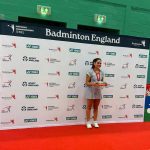
During the 2026 Championships, the Badminton Museum had the opportunity to speak with Freya Redfearn. Freya has represented England internationally and built an impressive career through the national system. She also spent time at the Championships as a volunteer, offering a unique perspective on the event from behind the scenes.

In this conversation with Mike from the Badminton Museum, Freya reflects on her early experiences in badminton, the influence of the sport’s heritage, and what the future of badminton in England could look like.
 

The Interview

What first drew you to badminton, and who influenced you most in your early playing years?

Freya: I started playing at school and immediately loved it. I had always played a lot of sport and enjoyed the competitive side. I began when I was around nine years old, which is later than some players, but there were many tournaments available for different levels and ages. I had some early success, which was very motivating when you are young. The coaches I had at Middlesex were a big influence during my early years. They helped develop my game before I moved into other training environments.

Freya: Winning the Under 15 National Championships was a big moment. I was already part of the England squad but had not yet won a major title. That victory gave me confidence that I could compete with the top players. 

Later in my junior career I was selected for opportunities connected with the World Junior Championships. That confirmed to me that badminton was something I really wanted to pursue seriously.

Freya: Badminton has a strong history in this country. Many people play it recreationally, but there is also a deep competitive tradition. Knowing that history makes you proud to represent England and be part of that legacy.

It is a sport that many people feel passionate about, and that background makes you want to contribute to it. The All England Championships hold a special place in badminton history.


Freya: I have been coming to the All England since I was about ten years old. I still remember the first time I came and watched the players. Seeing badminton played at that level with such an incredible atmosphere was very inspiring. It makes you want to be on that court one day. It really motivates young players.

Freya: I was a big fan of Tai Tzu Ying from Chinese Taipei. Watching her play here over the years was fascinating. She moved from being outside the very top of the rankings to becoming world number one. Watching that journey was very inspiring.

Freya:  I really enjoyed it, although it is hard work. You realise how much effort goes on behind the scenes. As a player you often do not think about that. You arrive and everything runs smoothly.

When you volunteer you see how many different teams and roles are involved. Everyone is passionate about doing a good job and making the event successful.

Freya: The biggest thing is how many different areas work together. I spent time around event control, the field of play, media operations, and athlete services.

All those departments work together to deliver the event. Their work makes the competition easier for the athletes and a better experience for spectators.

Freya: I would recommend badminton to anyone. There are competitions for many different levels and age groups. If you want to play for fun there are plenty of clubs, and if you want to compete there are lots of tournaments available.

For me it has been a very rewarding journey. It has also helped me grow as a person and those experiences stay with you.

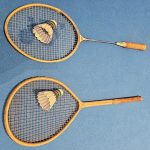
Freya: The rackets were very different from what we use today. They were much heavier than modern rackets. It is fascinating to see how equipment has developed over time. It gives you a real appreciation for how the sport has evolved.

Lorem ipsum dolor sit amet, consectetur adipiscing elit. Ut elit tellus, luctus nec ullamcorper mattis, pulvinar dapibus leo.

Freya: Looking at the history of the sport can be very inspiring. Seeing how badminton has developed helps people understand where it came from. If young players can see that history and connect with it, it might motivate them to pursue the sport further.

Freya: Enjoy every moment of it. A sporting career goes by very quickly. There will be highs and there will be challenges. If you take in the experiences and learn from them, the journey is incredibly rewarding. Those lessons stay with you long after competition finishes.

About Freya Redfearn

Freya Redfearn began playing badminton at school at the age of nine. What started as a simple introduction quickly developed into a serious sporting journey. Early success in junior tournaments helped fuel her motivation, and strong coaching support at Middlesex played an important role in her development.

Her junior career included a major breakthrough when she won the Under 15 National Championships. That result helped confirm her place among England’s emerging players and led to further opportunities within the national system, including selection pathways towards the World Junior Championships.

As a senior player, Redfearn trained at the national badminton centre in Milton Keynes for six years. Highlights of her career include competing at the Commonwealth Games and winning the English National Championships after finishing runner up for three consecutive years. These achievements marked significant milestones in a long and demanding sporting journey.

Despite stepping away from full time competition, she remains passionate about badminton and hopes to continue contributing to the sport in the future.
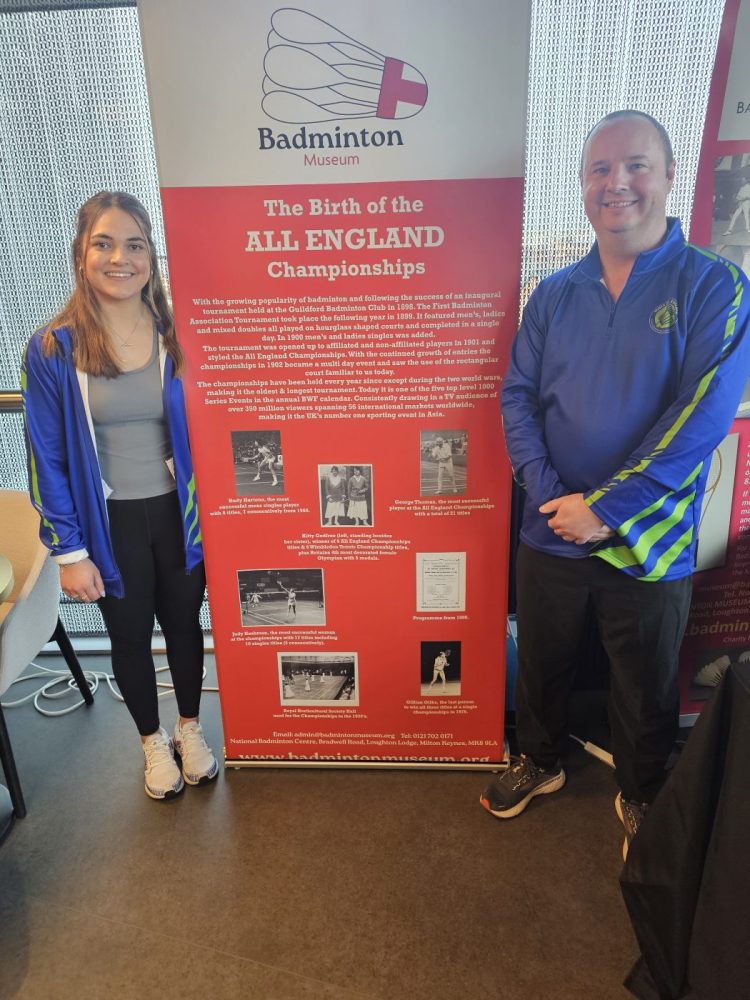
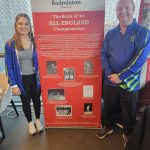
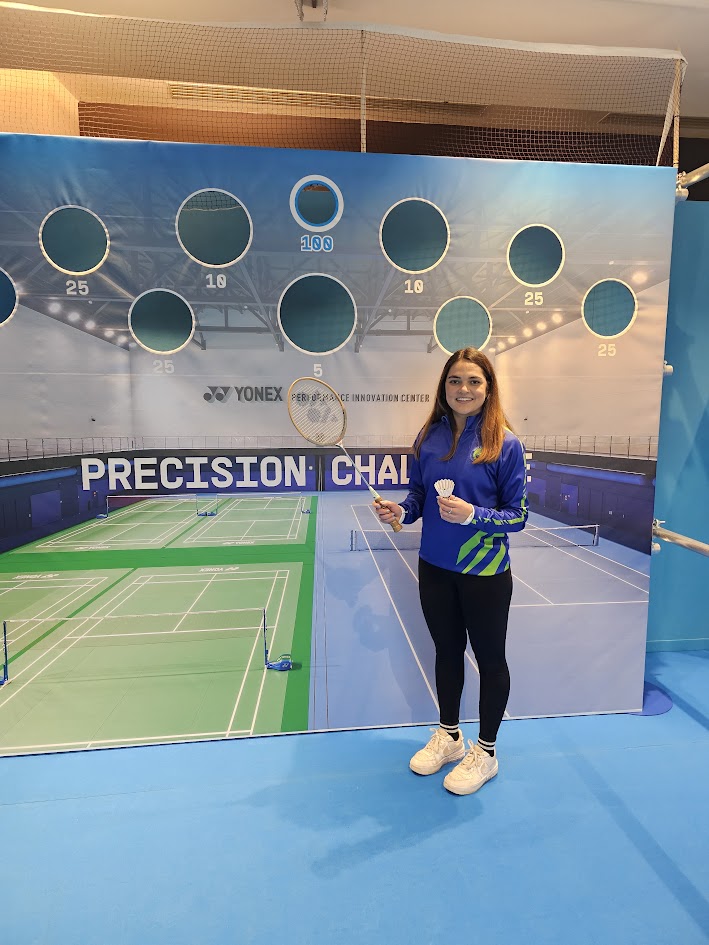
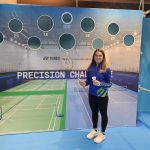
Freya Redfearn Badminton Player standing in front of a Badminton Museum Banner with Mike one from the Badminton Museum Board
Read More
Tony Jordan

‘King Tony’ – The Passing of a Legend

It is with great sadness that The Badminton Museum announces the passing of Tony Jordan, one of the all-time greats in the world of badminton. Tony’s remarkable career is highlighted by his historic achievement of being the first player to reach 100 international caps in our sport. This milestone is particularly incredible when considering the context of his era, which featured far fewer international matches compared to the bustling schedule of today.

In addition to his remarkable achievement of being the first player to reach 100 international caps, Tony Jordan was also honoured as the first recipient of the Member of the Order of the British Empire (M.B.E.) for his outstanding contributions to badminton. This prestigious award is a testament to his dedication, skill, and influence in the sport.

Tony’s dedication, skill, and sportsmanship not only set a benchmark for future generations of players but also helped elevate badminton’s status on the international stage. His contributions to the sport extended beyond the court, inspiring countless athletes to pursue their passion for badminton.

As we reflect on Tony’s legacy, we remember not just his achievements but also the spirit of perseverance and excellence he embodied. The badminton community has lost a true pioneer, and his impact will be felt for years to come. Our thoughts and condolences go out to his family, friends, and all who had the privilege of knowing him.

Rest in peace, Tony Jordan. Your legacy will forever be etched in the history of badminton.

Read More

Who Wears Short Shorts?

Did a badminton champion lead the way in popularising the wearing of shorts by men players of racket sports?

It’s been more than 90 years since Bunny Austin shocked Wimbledon by giving up on the white cricket flannels traditionally worn by male tennis players on the grounds their weight slowed him down and reached the 1934 finals in shorts.

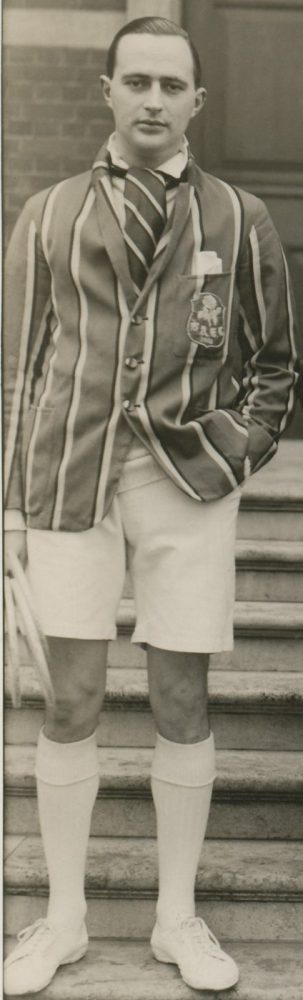
But by then Bristol-born Raymond ‘Bill’ White had been playing in shorts for at least three years while winning multiple tournaments on the international badminton circuit, including when reaching the men’s singles finals of the sport’s equivalent of Wimbledon in 1932, and winning the men’s doubles with Donald Hume.

White’s well-documented adoption of shorts and championship titles give him a place of honour in the Badminton Museum, Milton Keynes, where the photo records include one from a1931 England v Ireland international match he played in shorts in London against Frank Devlin.

There is no evidence, alas, of another alleged wardrobe first by White – that is that he is still the only rackets sports star to report to a major tournament referee dressed in a dinner jacket.

From the mid-30s onwards more and more racket sport players switched to shorts but long pants continued to be favoured at Wimbledon by France’s Yvon Petre, including when he won the 1946 men’s title.

The last Wimbledon player seen in trousers was Trey Waltke, USA, who wore a pair held up by an old school tie for fun during his 2nd round defeat in 1983 by that year’s eventual semi-finalist, Ivan Lendl.

Pam Beddard

Read More

THE FIRST WOMAN’S SINGLES CHAMPION AT THE ALL-ENGLAND BADMINTON CHAMPIONSHIPS.

 ETHEL THOMSON

Only three doubles events were played at the first All-England Badminton Championships in 1899. So, it was the next year, 1900, that the tournament was expanded to two days to include the men’s and women’s singles.

In 1900, at the age of 20, Ethel Thomson from Budleigh Salterton, Devon, England, became the first All-England woman’s singles champion. Ethel had to play fellow Devon player Muriel Lucas in the semi-final – they were considered the two best women players in the tournament. At that time, there was no seeding in the Championships; seeding was not introduced to the All-England Badminton Championships until 1932. In the final, Ethel beat Miss E. Mosley from Sutton Coldfield 17-15, 15-11. She also won the women’s singles title in 1901 and 1903, winning the trophy outright in 1904. Before 1979, if an All-England Champion won a trophy for three consecutive championships or four Championships in total, they were awarded the trophy outright. At the 1906 All-England Championships, she was the first woman player to complete the triple, winning the singles, women’s and mixed doubles titles.

At the very first All-England Championships in 1899, Ethel Thomson played women’s doubles with fellow Budleigh Salterton Badminton Club partner Jean Theobald, and they reached the final, only to be beaten by another pair from Devon, Muriel Lucas and Violet Graeme from the Teignmouth Badminton Club.

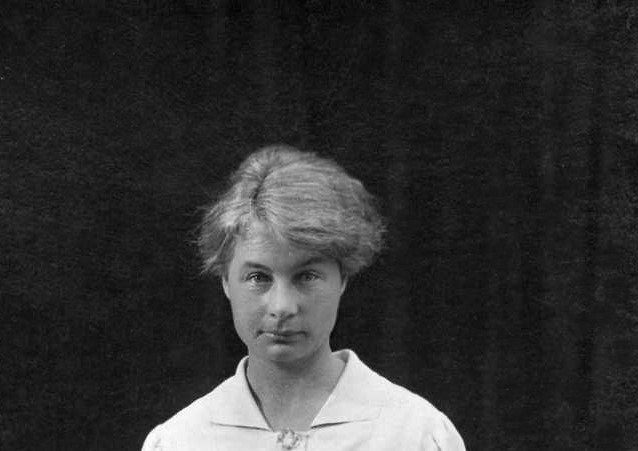
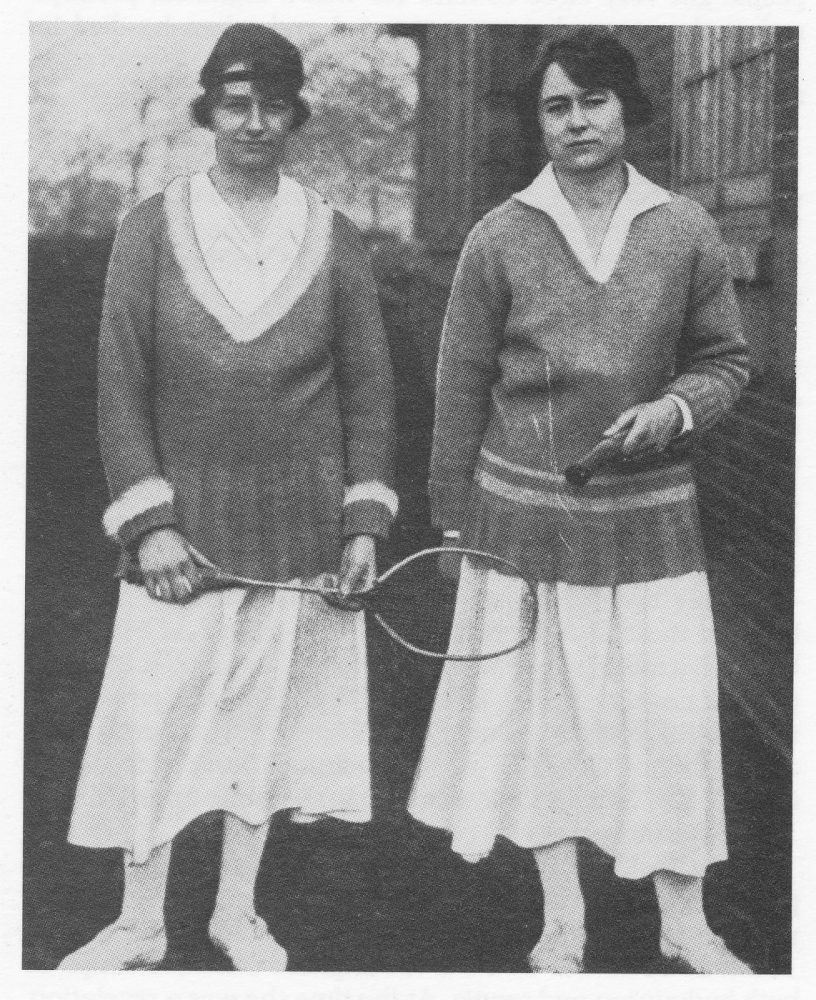
Murial Lucas and Ethel Thomson.


From 1902, Ethel would team up with Muriel Lucas in the women’s doubles, and they would share the first 11 women’s singles titles of the All-England from 1900 to 1910, with 5 in favour of Thomson and 6 in favour of Lucas. Together, they won 4 All-England women’s doubles titles. It was reported that they never lost a doubles match in tournament play. Ethel Thomson would win 3 All-England mixed titles with George Thomas. She retired from top-class Badminton in 1906 when she married Dudley Larcombe - Secretary of the Wimbledon Lawn Tennis Club.Ethel returned to badminton and tennis in 1911. Like many good badminton players of that time, Ethel Thompson was also a top-class tennis player, playing 70 matches at Wimbledon from 1902 to 1921. At the age of 33, she won the Wimbledon Women’s Singles Championships in 1912, and she also added the mixed doubles championship title partnering Cyril Parker from Ireland in 1914.Ethel Thomson and Sidney Smith, the first-ever All-England Badminton men’s singles champion in 1900, played tennis mixed doubles together, and they were the mixed doubles Wimbledon All-Comers tournament winners in 1903 and 1904.Wimbledon, until 1922, had a system where players played in the All-Comers tournament, and then the winner played in the Challenge Round final against the holder of the title from the previous year; the winner of this final would be the Wimbledon champions.

Geoff Hinder

Read More

The First Ever All-England Badminton Men’s Singles Champion

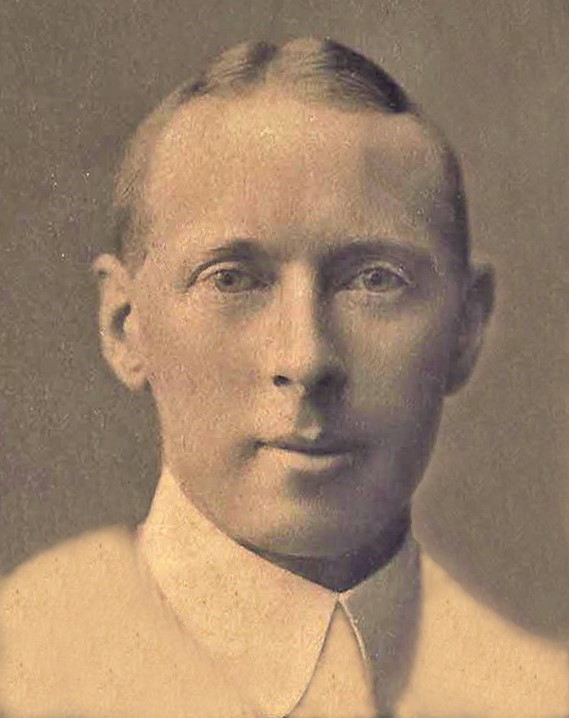
Sydney Howard Smith

At the first All-England Badminton Championships in 1899 it was only the three doubles events played. So, it was the next year 1900 that the tournament was expanded to two days to include the men’s and woman’s singles.

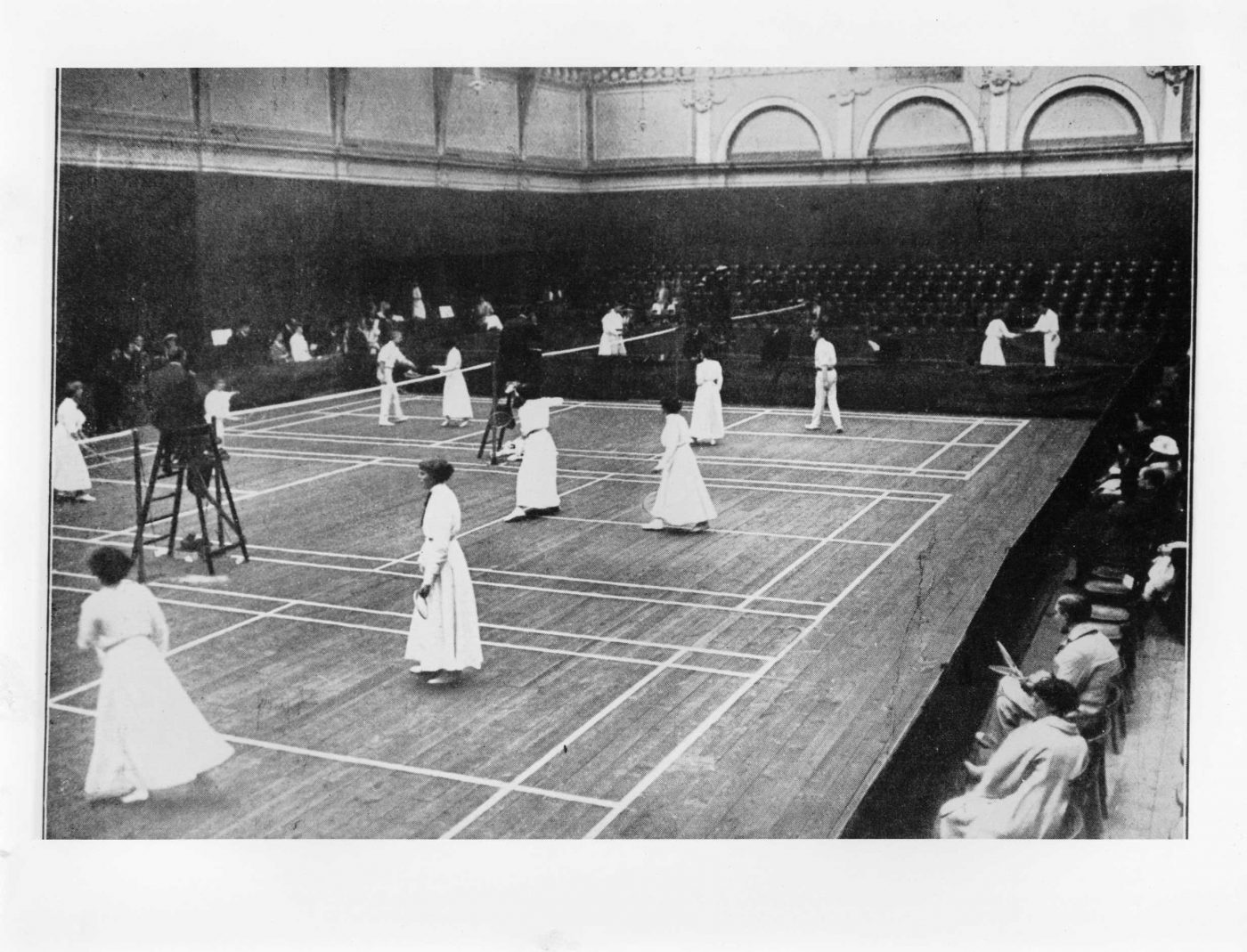
Sydney Howard Smith from Stroud in Gloucestershire at the age of 28 became the first ever All-England men’s singles champion. In March 1900 almost 300 spectators turned up at the London Scottish Regiment Drill Hall, London’s Buckingham Gate to watch, there were 21 players in the men’s singles event. Unlike today’s rectangular courts, then courts were hourglass-shaped, 40 feet (13.4m) long x 20 feet (6.1m) wide and 16 feet (4.88m) wide at the net.

W. Oakes and Smith had little difficulty in reaching the men’s singles final with Smith beating Oakes 15-12, 11-15, 15-10.

1901 saw Sidney Smith defending his title and was given a bye into the second round where he was dispatched by the eventual winner Capt. H. W. Davies. Smith never entered the All-England again after that.

Geoff Hinder

Read More

All England Record Breaker – Rudy Hartono

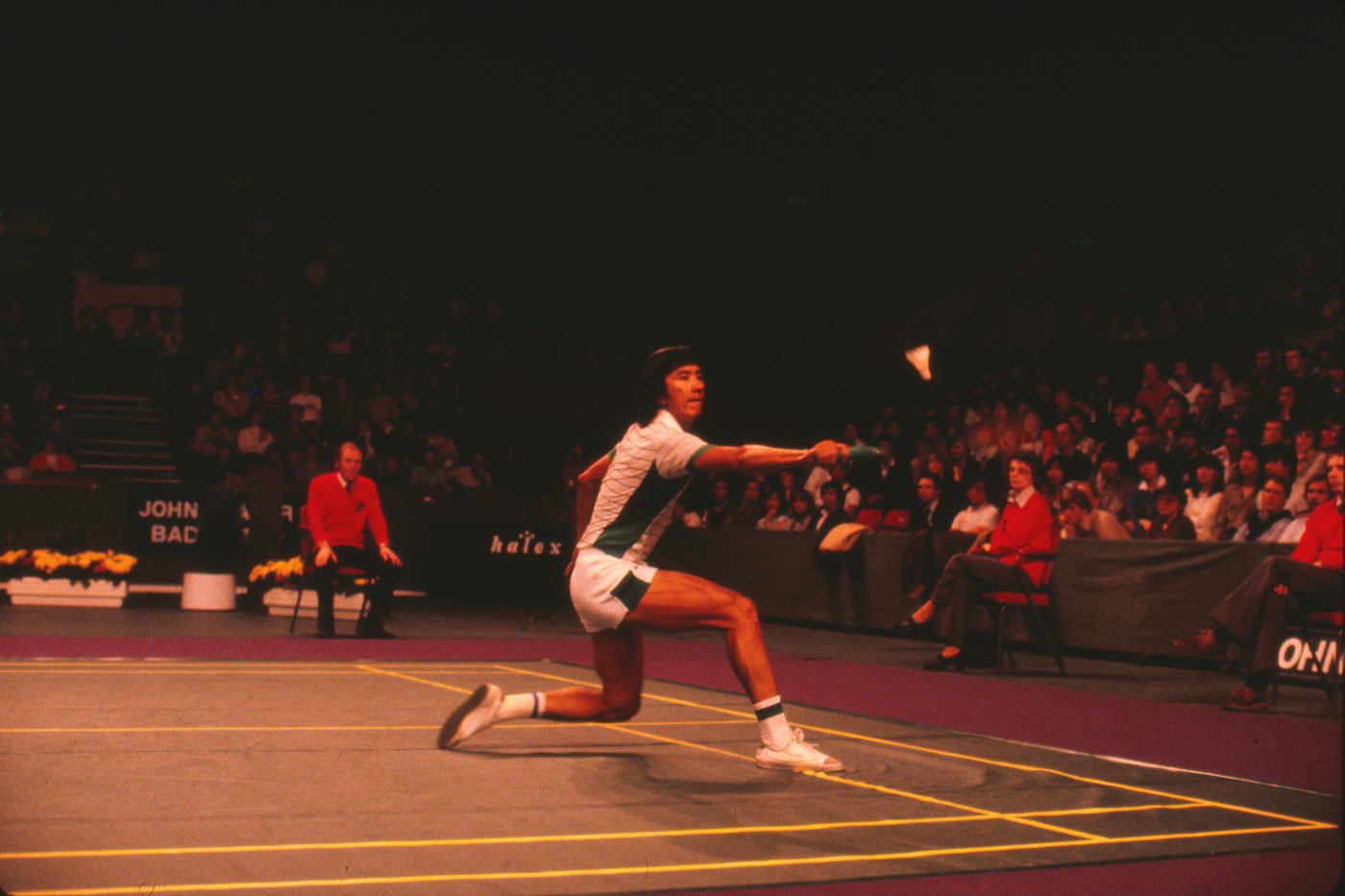
Rudy Hartono one of the truly great All England champions.In 1976 Rudy Hartono from Indonesia broke the record for eight men’s singles titles. Erland Kops of Denmark had previously held the record of seven.Rudy started playing at the All England Championships in 1968 and would dominate world men's singles badminton for the next 10 years. Even in his first championship he broke an All England record by becoming the youngest men's singles champion at the age of 18 years and 7 months. From 1968, he would win the men's singles title for 7 consecutive years.

Photo Peter Richardson

1975 All-England Men’s Singles final. Rudy Hartono (Indonesia) v Svend Pri (Denmark)

Photo Graham Habin

At the height of his dominance in men’s singles in 1971, playing six matches to win the All England singles he only had 39 points scored against him. In Rudy’s 10-year All England career he only ever lost two matches.

It was in 1975 making his first attempt at breaking the record of eight titles Rudy would lose his first-ever match at the All England. Playing tentatively in one of the most exciting and memorable finals he lost to the Dane Svend Pri in straight sets.

Finally, in 1976 playing against his fellow countrymen Liem Swie King, Rudy would achieve his record-breaking eighth All- England crown.

Some people say that Hartono is the greatest men's singles All-England champion; he was certainly the youngest men's singles champion and there never has been a player that dominated the event for so many years.

Photo Peter Richardson

Photo Peter Richardson

Geoff Hinder

Read More

Judy Hashman nee Devlin – One of the Great Champions

Photo:- K.Hall

Judy Hashman was born in Canada, the daughter of the Irishman Frank Devlin one of badminton’s first legends. Frank won an incredible 18 All-England titles in just nine years, between 1922 and 1931- a genuinely mind-boggling feat that may never be surpassed. He probably never imagined how close his daughter would get to beating the number of titles he won.

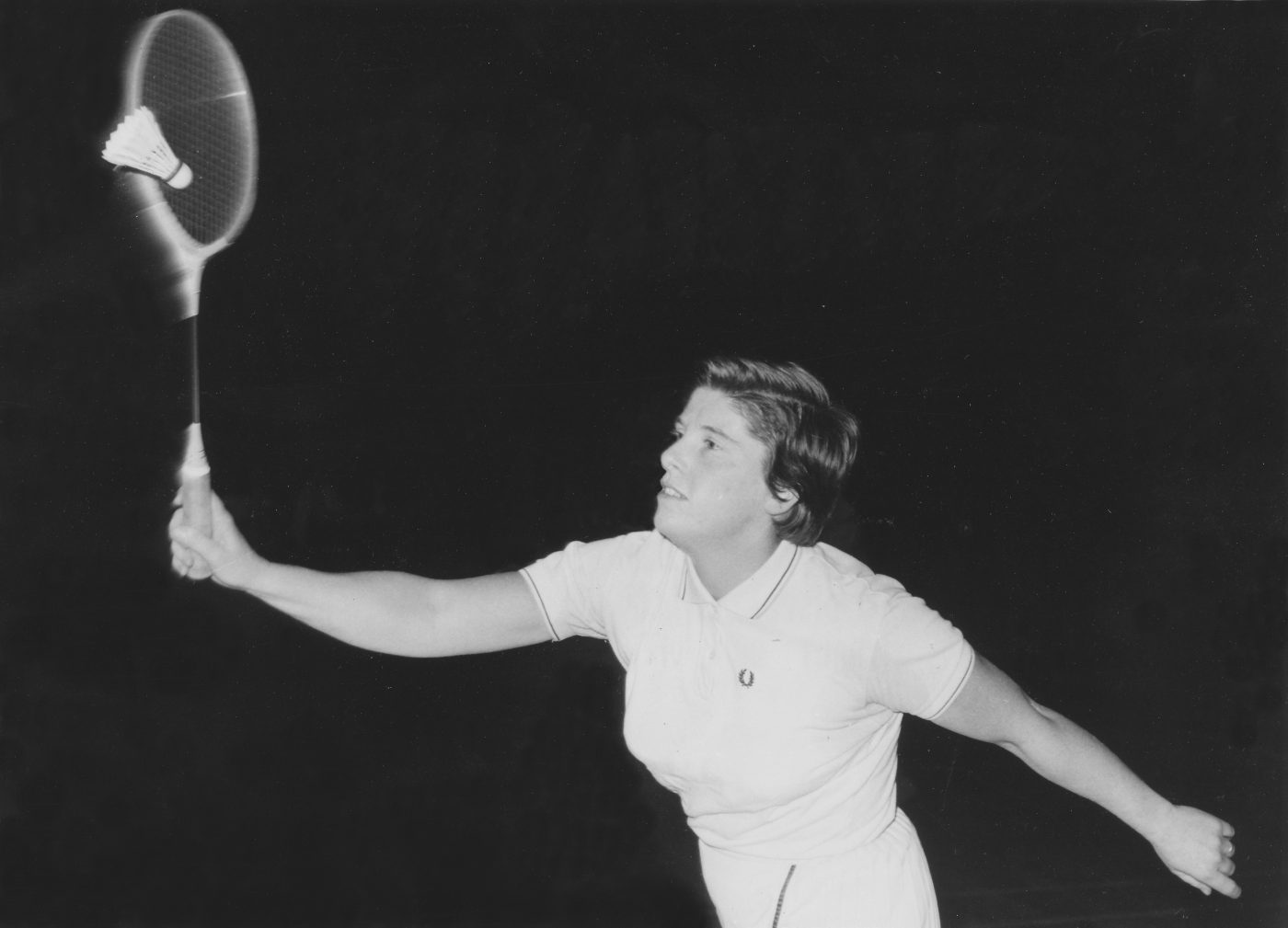
Judy’s All-England career began in 1954, at the age of just 18 years and 4 months. In this, her first appearance at the All-England, the young Devlin won the women’s singles, making her the youngest All-England champion ever. Partnered with her sister Sue aged 20 (later Peard), she won the woman’s doubles as well, this was the first of their six doubles titles. In the space of just three weeks, Judy won two US Open, two All-England and three US junior national titles – as well as becoming a US lacrosse international.

Margaret Varner and Judy Devlin (1958)
In 1955 and 1956, she lost in the Women's Singles final of the All-England to the Texan Margaret Varner. However, she would gain revenge for these defeats, securing consecutive trophies and vanquishing Varner in both finals in '57 and '58.1959 saw Varner too busy playing tennis and squash for the USA to compete at the All-England, but Judy failed to take advantage - she lost to the 19-year-old English girl, Heather Ward (later Nielson).

Judy and Sue Devlin (1960)
Judy Hashman embarked on an incredible spell of dominance. From 1960 to 1964, she would win five consecutive women's singles competitions; she moved head and shoulders above the competition. In 1965, this incredible run was broken; this was due mainly to the fact that she had a baby in January. By the time March came around, she still achieved a highly credible Fourth Round finish- once again demonstrating her exceptional abilities. 

1966 All-England Woman's Singles final. Judy Hashman (USA) (far end) v Imre Rietveld (Netherlands) at the Wembley Arena, London
Judy was back winning ways in 1966 and carried her number one seeding through to win the final against Miss Imre Rietveld from the Netherlands.
(photo Graham Habbin)

1967 All-England Woman's Singles final. Noriko Takagi (Japan) (far end) v Judy Hashman (USA). at the Wembley Arena, London

Photo Graham Habbin

1967-Judy Hashman - The Final Championship.

To finish the greatest career in women's badminton, Judy resisted the immense Japanese challenge in 1967, which was led by Miss Noriko Takagi.
Earlier, Miss Takagi had beaten Judy in the Uber Cup in New Zealand and pressure had mounted for the great star to bail out from the All-England while still at the top. But Hashman chose to defend her title, and in due course, Judy faced Takagi in the final. Judy managed to get back from a one-game-to-love deficit and levelled to one game all, but the young Japanese girl's shots were deceptive and Judy was on the verge of exhaustion. When the Japanese girl led by 5-1 in the third, it looked like Judy's advisers were going to be proved right, but with her intense concentration and will to win, she fought back to save a match point, eventually snatching a 12-10 win and claimed the title for the 10th time.
Never before nor after did she play so well for so long, it is a tribute to her that she would climax a career with such a class performance. After the final, Judy pulled the curtain down on her glittering singles career- retiring at the top, as she had wanted.

Judy won a total of 17 All-England titles, which included 10 women’s singles titles, which is a record that has never been broken, and 7 women’s doubles titles, 6 of those with her sister Sue.Judy appeared in every All-England women's singles final between 1954 and 1967, apart from her break in 1965 following childbirth. This is truly incredible and surely places her near the top of the pantheon of great champions this sport has created.

Judy was a member of the USA winning Uber Cup teams in 1957, 1960 and 1963.

In the middle of her playing heydays, Judy Devlin married Dick Hashman. Judy and Dick had once reached a semi-final in the mixed doubles at the All-England. In 1960, she moved to England and became a British citizen 10 years later. After gaining her new citizenship, Judy helped her adoptive country collect medals at the 1972 European Championships, with one title in the team event and another one in the women’s doubles with Gillian Gilks.

With Gillian Gilks she won the English National Championships Woman’s Doubles titles in 1972 and 1973.Judy represented England at international level 8 times.In 1978, Judy Hashman had a very brief but successful stint as head coach of the English team. She led the team to a gold medal at the European Mixed Team Badminton Championships.

With her exceptional career, it was no surprise that international honours were awarded to Judy. In 1985, she became the first woman to be awarded the International Badminton Federation Distinguished Service Award.

In 1995, Judy received one of the most coveted rewards for a female athlete when she was inducted into the International Women’s Sports Hall of Fame. Judy joined international athletes such as Martina Navratilova and Sonja Henie. Two years later, Judy and her father, Frank, were voted into the International Badminton Federation Hall of Fame.

Although she did not quite topple her father's record, it is amazing that the same family produced such a dynasty—a true legend of the All-England.

Photo Graham Habbin

Post by Geoff Hinder

Read More

Kitty Godfree – All England Champion also Olympic and Wimbledon Champion

Kitty Godfree nee McKane a remarkable All England Champion and sportswoman.

Kathleen 'Kitty Godfree with her sister, Margaret Stocks

We take a look at one of the most remarkable All-England Champions and sportswoman of the past. Kitty McKane (later Godfree) not only won eight All-England titles in the 1920s but she also won an Olympic gold medal, 2 silver and 2 bronze medals for tennis, she was also a Wimbledon tennis champion.

She was born on 7 May 1896. Nine years later she cycled from London to Berlin, a short distance of 600 miles with Margaret, her sister and parents!

In Kitty Godfree's autobiography by Geoffrey Green: Kitty records: “The only advice-not coaching-I got from uncles and cousins when I first picked up a racket at the age, I suppose of ten. ’Use your right-hand’ they used to urge. ’Tennis is played with the right-hand’.

So right it became. Yet basically I am left-handed. I used to play cricket left-handed, as batsmen, bowler, fielder and thrower; I was left-handed at lacrosse; I serve cards and write left-handed. I now wonder if I would have better on my natural, port side. Because of my tennis I played badminton with my right hand. This cannot now be answered, but sometimes I wonder.

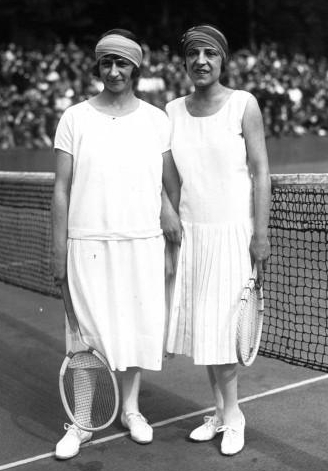
Kitty Godfree with Susan Lenglen at the 1925 Wimbledon Tennis Championships

From 1920 to 1922 Kitty won three consecutive All-England badminton woman's singles titles and the woman's doubles title with her sister Margaret in 1921. At the 1924 Championships Kitty achieved a hat-trick of titles by winning the singles, doubles again with her sister and mixed doubles with Frank Devlin. To make it eight All-England titles in 1925 she won the mixed again with Frank Devlin.

In the 1920 Antwerp Olympic Games she came away with a set of medals for tennis, winning the woman's doubles gold, mixed doubles silver and the woman's singles bronze. At the 1924 Olympic Games in Paris she won the women's doubles silver and woman's singles bronze.

Kitty won the Wimbledon singles titles twice. In the 1924 final, Kitty recovered from a set and 4-1 (40-15) down against Helen Wills Moody to win the title. In the 1926 final, Kitty recovered from a 3-1 and game-point-against deficit in the third set to defeat Lili de Alvarez.

Kitty and her husband Leslie Godfree are the only married couple ever to win the mixed doubles championships at Wimbledon. They won the title in 1926.

This remarkable sportswoman was also selected to play lacrosse for England.

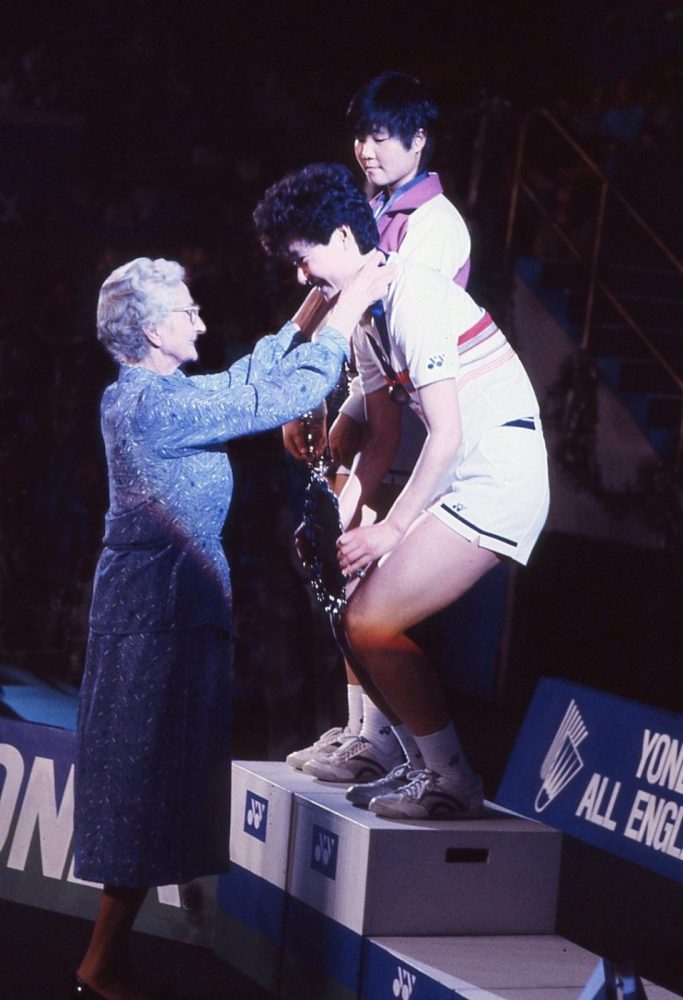
Kitty Godfrey at the age of 90 presenting the trophies and winners' medals for the 1986 Yonex All England Women's Doubles tile to Chung Myung-Hee and Hwang Hye-Young from Korea.

Photo by Louis Ross

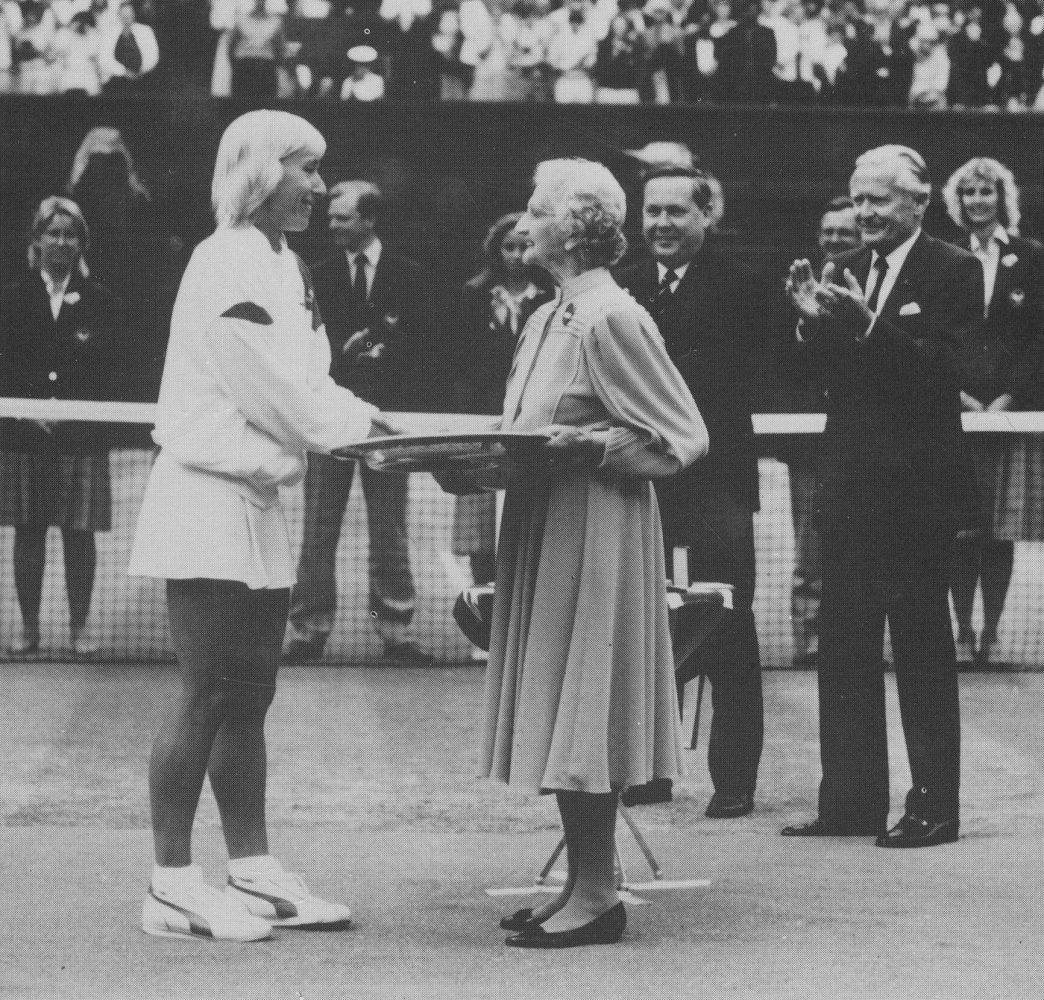
Kitty Godfree presenting the women’s singles trophy to Martina Navratilova at the 1986 Wimbledon Tennis Championships

Geoff Hinder

Read More
error: Content is protected !!